Geisha coffee from Colombia: green lots for roasters and importers
Geisha coffee from Colombia is the Ethiopian-origin Geisha (Gesha) variety grown at high altitude in the Colombian Andes. It is low-yielding and demanding to farm, and at altitude it can deliver floral, jasmine and stone-fruit cups. The lots we source today come from a partner producer in Cauca, and every lot should be bought against a physical analysis, an SCA cupping score and a documented process protocol.
- Origin
- Colombia — Cauca
- Typical altitude
- 1,800–2,100 MASL (partner producer, Cauca)
- Variety
- Geisha / Gesha (Ethiopian landrace lineage)
- Processes
- Thermal shock washed · Anaerobic (single & double) · Koji · Lager yeast
- SCA cup range
- 87–91 pts (partner producer, Cauca)
- Profile
- Jasmine · bergamot · stone fruit · silky body
- Availability
- Lot availability confirmed on inquiry
- Volume
- Micro-lots to container volume (producer capacity)
Where does the Geisha variety come from?
Geisha is not a Panamanian or Colombian creation. According to World Coffee Research, it was collected from coffee forests in Ethiopia in the 1930s, sent to the Lyamungu research station in Tanzania and, in 1953, reached CATIE in Costa Rica, where it was catalogued as accession T2722. From there it was distributed across Panama in the 1960s, valued for its tolerance to leaf rust rather than for its cup.
For decades it went largely unnoticed: the trees are tall and their branches brittle, so farmers rarely favored it. That changed when high-altitude Geisha lots were separated and cupped on their own. Hacienda La Esmeralda in Boquete, Panama, won the Best of Panama competition with Geisha in 2004 and set an auction price record that year (WCR dates the variety's breakthrough to 2005). Since then Geisha has become the reference variety for top-tier specialty buying.
You will see two spellings. 'Geisha' is the spelling in the original germplasm records; 'Gesha' is preferred by many in the industry because it matches the Ethiopian mountain the plant is associated with. They refer to the same variety on a lot ticket.
Why is Geisha coffee so expensive?
The price premium is not marketing alone. It comes from agronomy, yield and scarcity of truly well-grown lots:
- Low yield potential: WCR rates Geisha's yield as low, so each hectare produces fewer bags than common commercial varieties.
- Altitude dependence: its exceptional quality potential appears at high altitude (above roughly 1,600 m near the equator). Lower down, it often cups ordinary.
- Disease exposure: WCR lists it as susceptible to nematodes and coffee berry disease, with only intermediate rust resistance, which raises farm management costs.
- Selective harvest and separation: the cup only shows when ripe cherries are picked carefully and the lot is kept apart from other varieties.
- Demand concentration: competition baristas, auction buyers and premium roasters all bid for a small pool of high-scoring lots.
What does Colombian Geisha taste like?
Well-grown, washed Geisha is typically described as floral and tea-like: jasmine, bergamot, peach and other stone fruit, citrus, with a light, silky body and a long, clean finish. WCR describes the Panamanian line as delicate floral, jasmine and peach-like.
Process shifts that baseline. Naturals push ripe fruit and sweetness; anaerobic and thermal shock lots can intensify tropical fruit and aromatic clarity. For roasters, the practical point is that Geisha rewards lighter development and careful extraction; heavy roasting erases the floral top notes buyers are paying for. Our journal article on thermal shock processing explains how that method changes the cup.
How Geisha is grown in Colombia
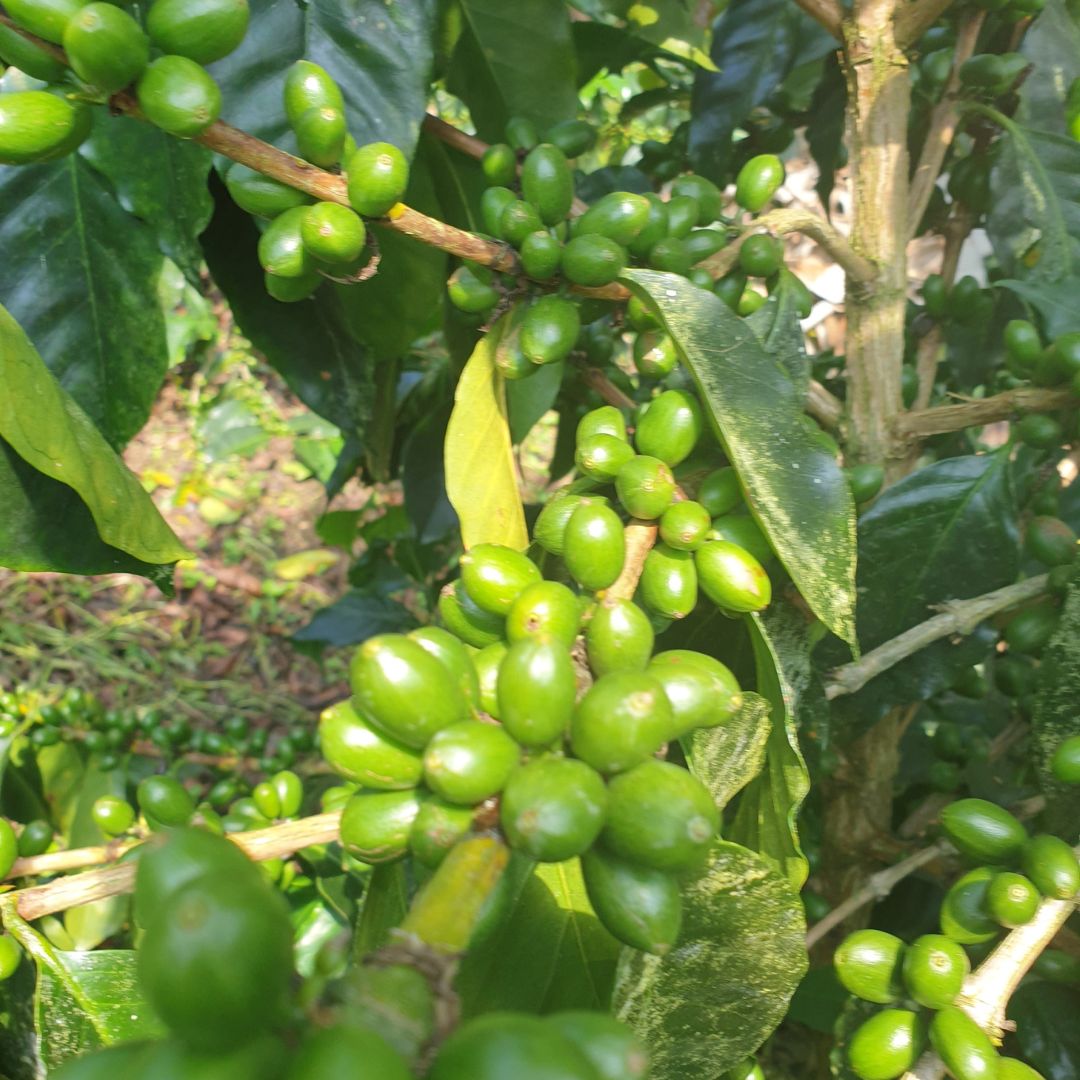
In Colombia, Geisha is grown by a minority of specialty-focused farms, where the Andes offer the altitudes the variety needs. The Geisha we source today comes from one partner producer in Cauca, farming at 1,800–2,100 MASL. Its credentials include national-champion lots and lots used by World Brewers Cup competitors, and it runs microbiology and quality laboratories on the farm. Our producer network is expanding, and we accept applications from producers across Colombia.
Because Geisha is a small share of most farms, it is usually harvested, fermented and dried as separate micro-lots or nano-lots. That separation is what makes traceability possible, and it is also why volume per lot is limited.
What to ask before buying green Geisha
A variety name on an offer sheet is not a guarantee. Before committing to a Geisha lot, ask for:
- Physical analysis: moisture, water activity, screen size and a defect count on a 350 g sample, following the SCA green grading protocol.
- Cupping score: an SCA-protocol score (80+ is specialty; serious Geisha lots usually sit well above it), ideally confirmed on your own pre-shipment sample.
- Process protocol: fermentation type, duration, temperature and drying method, written down so the profile can be repeated next harvest.
- Lot traceability: harvest date, lot size and how the Geisha was kept separate from other varieties on the farm.
- Shipping and packaging plan: hermetic liners and transit time matter more for delicate, floral coffees.
Sourcing Geisha through OriginAlliesCoffes
OriginAlliesCoffes is a B2B sourcing desk. We connect roasters, importers and coffee chains with verified specialty producers in Colombia, and the connection costs the buyer nothing. Today our network includes one partner producer in Cauca, and it is expanding. The producer's identity is shared only with verified buyers after a short discovery call.
You tell us the profile, process, cup range and volume you need; our partner producer works from micro-lots to container volume. We review your request with the producer, coordinate pre-shipment samples with their physical and cupping data, and support the introduction so you can negotiate directly.
Frequently asked questions
Is Geisha the same as Gesha?
+
Yes. Both names refer to the same Ethiopian-origin variety. 'Geisha' is the spelling used in the original germplasm records, while many in the industry prefer 'Gesha' after the Ethiopian mountain it is associated with. On a lot ticket, either spelling identifies the variety.
Is Colombian Geisha as good as Panamanian Geisha?
+
It depends on the lot, not the flag. Altitude, harvest discipline and processing decide the cup. Colombian Geisha from high-altitude farms can compete at the top of the scale, but every lot should be judged on its own physical analysis and cupping score.
What cup score should a Geisha lot have?
+
The SCA sets 80 points as the specialty threshold, but buyers usually expect Geisha to score clearly higher. Our partner producer in Cauca cups in the 87–91 point range. Always confirm the score on a pre-shipment sample of the specific lot, cupped under SCA protocol.
Can I buy Geisha in container volume?
+
Rarely as a single lot. Geisha is low-yielding and usually separated into micro-lots or nano-lots. Our partner producer works from micro-lots to container volume, but how much Geisha is available depends on each harvest. Tell us your volume and we will check what is realistic.
Do I pay to be introduced to a Geisha producer?
+
No. Buyers do not pay for the connection. After a discovery call and verification, we share the producer's identity and lot data, coordinate samples and support the introduction. Commercial terms are then negotiated between you and the producer.